
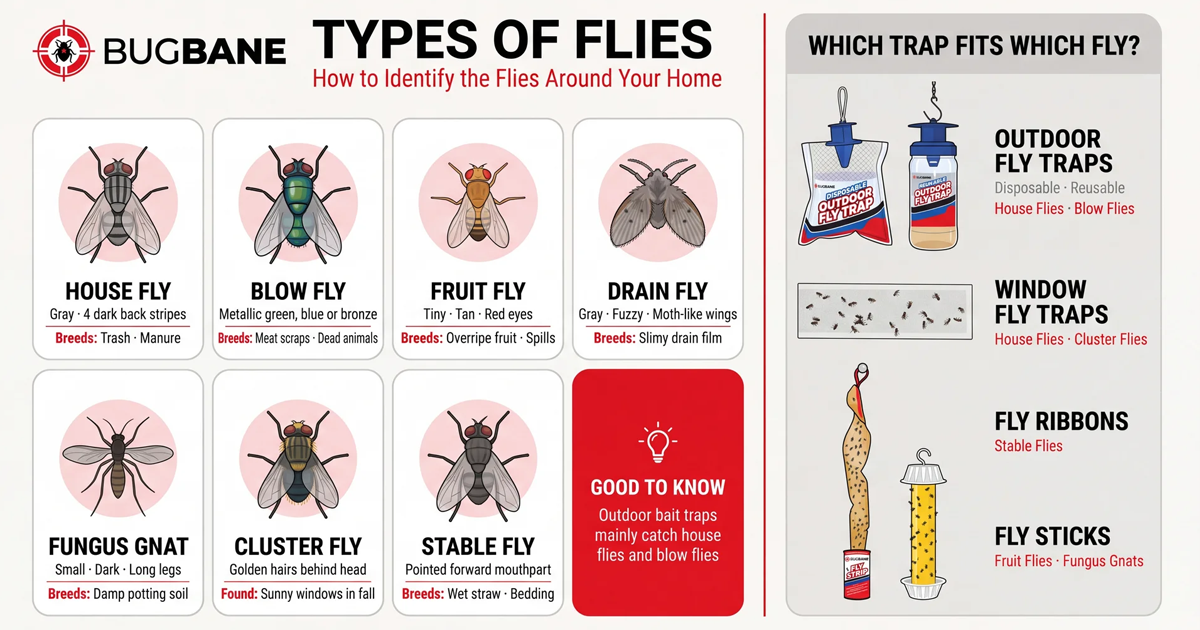
Not every fly is the same pest. The fly circling your trash can, the tiny ones over the fruit bowl and the fuzzy ones on the bathroom wall are different insects that breed in different places. Knowing which one you have tells you where to look and which kind of trap will help. Here are the flies people most often find in and around the home.
House fly
What it looks like: gray, about a quarter inch long, with four dark stripes on the back behind the head.
Where it breeds: trash, pet waste, manure and other rotting organic matter. In hot weather a house fly can go from egg to adult in about a week or two.
What helps: remove the breeding material, then use an outdoor bait trap near the source and sticky traps indoors. This is the fly that outdoor bait traps are made for.
Blow fly (bottle fly)
What it looks like: shiny metallic green, blue or bronze, a little larger than a house fly, with a loud buzz.
Where it breeds: meat scraps, dead animals and pet waste. A sudden group of blow flies indoors often means a dead rodent or bird in a wall, attic or chimney.
What helps: find and remove the source. Outdoors, bait traps attract blow flies as well as house flies.
Fruit fly
What it looks like: tiny, about an eighth of an inch, tan or brown, usually with red eyes. It hovers around fruit, drains and recycling.
Where it breeds: overripe fruit and vegetables, spilled juice or wine, and the residue in bottles and cans.
What helps: put ripe produce in the fridge, rinse recycling, and take out the trash. Once the food source is gone the flies fade within a week or two. Sticky traps placed near the fruit bowl catch adults in the meantime.
Drain fly (moth fly)
What it looks like: small, gray and fuzzy, with wings held like a tiny moth. It rests on walls near sinks, showers and floor drains and flies weakly.
Where it breeds: the slimy film inside drains and in other places that stay wet.
What helps: scrub the inside of the drain with a stiff brush and flush with hot water. Traps alone will not solve a drain fly problem, because the larvae live in the drain.
Fungus gnat
What it looks like: a small, dark, long-legged fly that looks like a tiny delicate gnat. You see it walking on potting soil or flying up when you water a plant.
Where it breeds: damp potting soil.
What helps: let the top inch or two of soil dry out between waterings. A sticky trap placed at the soil line catches the adults.
Cluster fly
What it looks like: slightly larger and slower than a house fly, dark gray with fine golden hairs behind the head.
Where you find it: gathering on sunny walls and windows in fall, and inside attics and upper rooms on warm winter days. Cluster flies come indoors to spend the winter. They do not breed in trash or food.
What helps: seal gaps around windows, siding and eaves before fall. Window traps catch the ones that reach the glass.
Stable fly
What it looks like: very similar to a house fly, with a pointed mouthpart that sticks forward from the head. It is common around horses, cattle and kennels.
Where it breeds: wet straw, hay, bedding and grass clippings mixed with manure.
What helps: keep bedding dry and clean out wet organic material often. Sticky traps and ribbons in barns and stables catch adults where they rest.
Which trap fits which fly?
- Disposable Outdoor Fly Traps — for house flies and blow flies outdoors, near bins, coops and kennels
- Reusable Outdoor Fly Trap — the same job, refilled with new bait through the season
- Window Fly Traps — for house flies and cluster flies that reach the windows indoors
- Fly Ribbons — for garages, porches, barns and stables
- Fly Sticks — for small flies near plants, fruit and bins
For a step-by-step plan once you know your fly, see How to Get Rid of Flies. Our Fly Control guide has an identification chart you can keep.
Types of flies: FAQ
What are the tiny flies in my kitchen?
Usually fruit flies if they hover around fruit, trash or recycling, and drain flies if they are fuzzy and sit on the wall near the sink. Fungus gnats are the ones that stay close to houseplants.
What are the big green or blue flies in my house?
Blow flies, also called bottle flies. Several at once indoors usually points to a dead animal or spoiled meat nearby.
Why are there flies in my house in winter?
They are most likely cluster flies that came in during fall to spend the winter. They wake up on warm days and move toward the windows.
Do outdoor bait traps catch every kind of fly?
No. Bait traps attract flies that breed in waste and rotting material, mainly house flies and blow flies. Fruit flies, drain flies and fungus gnats are handled by removing what they breed in, with sticky traps to catch the adults.
Know your fly? Shop BugBane fly traps on Amazon.