How the trap works

The Fly Glue Stick is a non-toxic, bait-free adhesive insect trap. It is a rigid cylindrical rod coated with a non-drying, pressure-sensitive glue. Flying insects are drawn to the bright yellow surface, land on the stick, and are held in place by the adhesive. The trap captures insects mechanically through the glue and contains no insecticide.

What it catches

The stick is a broad-spectrum mechanical trap intended for houseflies, fruit flies, gnats, cluster flies, and moths. The bright, reflective yellow surface acts as a visual attractant for flying insects. The bottom cap can also hold a few drops of cider vinegar or sugar water to help draw fruit flies and other scent-seeking insects.

Placement

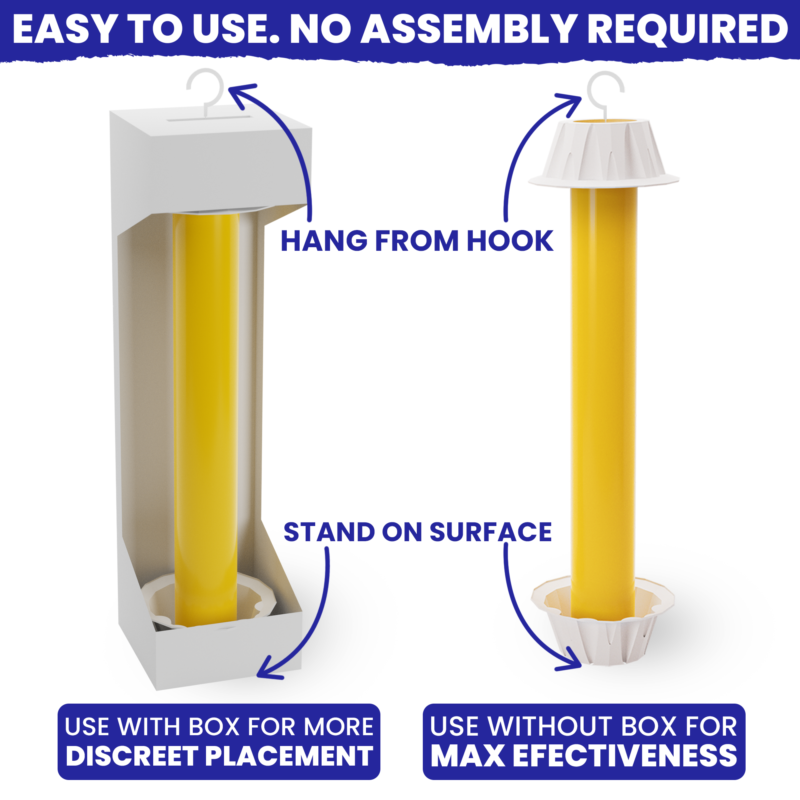
  • Hang or stand. Each stick includes an integrated plastic hook for hanging from ceilings, rafters, or hooks, and a flat base cap so it can stand upright on windowsills, countertops, or tables.
  • Position near fly activity. Place sticks where flying insects gather, such as near windows, doors, and bright light sources. One stick covers roughly 150-200 square feet of indoor space.
  • Keep it vertical for best results. Flies prefer to land on vertical surfaces, so a hanging or upright stick generally captures more than one laid flat.

What to expect

  • The adhesive stays tacky for up to 90 days or until about 80% of the surface is covered by trapped insects and debris.
  • Capture rate depends on placement. Moving a stick even a few feet, or closer to a light source, can change insect flight paths and improve results.
  • Dust reduces tackiness. Avoid placing sticks near fans or dusty areas, since a coating of dust lets insects land and take off without sticking.

Materials

The stick is made from heavy-duty reinforced cardboard with protective plastic end caps. The coating is a non-drying, pressure-sensitive hot-melt adhesive. The trap contains no insecticide and is fragrance-free.

Disposal

When the stick is full, wrap it in newspaper or a plastic bag before placing it in standard household trash. This keeps the glue and trapped insects from sticking to the trash bin. There is no need to touch the adhesive surface during disposal.
General Product Information
  • Brand: BugBane
  • Model Number:
    FlySti4 – Fly Sticks – 4 Pack
    FlySti6 – Fly Sticks – 6 Pack
  • Product Type: Adhesive Insect Trap
  • Primary Function: Capture and containment of flying insects via high-tack adhesive.
  • Target Species: Houseflies, Fruit Flies, Gnats, Cluster Flies, and Moths.
  • Stick Material: Heavy-duty reinforced cardboard
  • Adhesive Base: Non-drying, pressure-sensitive hot-melt adhesive
  • Dimensions (Per Trap): 10.5 inches (26.7 cm) from base cap to top hook.
  • Effective Adhesive Length: 8.25 inches (21 cm) of exposed sticky surface.
  • Form Factor: Rigid cylindrical tube with protective plastic headers.
  • Color: Golden Yellow (high-visibility for insects)
  • Retail Unit: 4 Pack or 6 Pack of sticks per box
  • Hardware Included: Integrated hanging hooks (pre-installed)
  • Packaging Material: Recyclable cardboard box.
  • Storage Requirements: Store in a cool, dry place out of direct sunlight to maximize shelf life.
  • Adhesive Strength: Industrial-grade high-tack adhesive (capable of holding insects up to the size of a large horsefly).
  • Effective Lifespan: Up to 90 days or until about 80% of the surface area is covered by debris and insects.
  • Temperature Tolerance: Stable between 35°F and 110°F (1.6°C to 43°C). Adhesive may become more viscous in extreme heat exceeding 120°F.
  • UV Resistance: Adhesive formula includes UV inhibitors to limit yellowing or skinning when placed in direct sunlight.
  • Moisture Resistance: Water-resistant adhesive; heavy rain may reduce tackiness until the unit dries.
  • Mounting Type: Vertical hanging or free-standing.
  • Coverage Area: One stick is recommended for every 150-200 square feet of indoor space.
  • Cleanup Solvent: Vegetable oil, mineral oil, or a specialized adhesive remover.
  • Material: Contains no insecticide; the adhesive is the active capture mechanism.
  • Odor Profile: Fragrance-free.
  • Disposal: Non-hazardous household waste. Can be disposed of in standard trash receptacles.
  • EPA Establishment Number: 93378-CHN-1. This product is a pesticide device under FIFRA and requires an EPA Establishment Number; it is not registered with the EPA, as a pesticide device does not require EPA registration.
  • Precautions: Keep out of reach of children and pets.
DIRECTIONS FOR USE

Follow these steps to set up and use your sticky cylinder trap.

Choose Your Setup Method

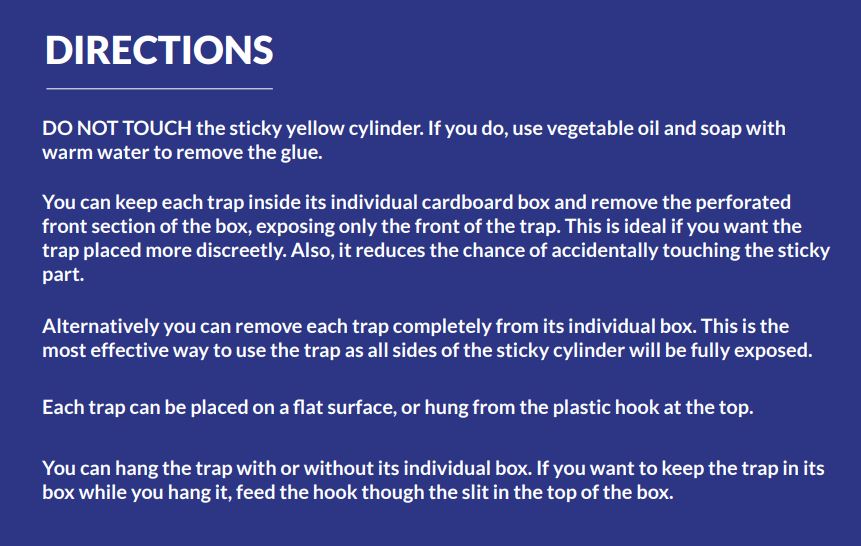
  • For maximum effectiveness: Remove the trap completely from its individual cardboard box. This exposes all sides of the sticky cylinder.
  • For discreet use: Keep the trap inside its box and remove the perforated front section to expose only the front of the trap. This also helps prevent accidental contact with the glue.

Placement

  • On surfaces: Place the trap on any flat surface where pest activity is noticed.
  • Hanging: Use the plastic hook at the top to hang the trap.
    • If using with the box: Feed the hook through the slit in the top of the box before hanging.

Safety & Handling

  • Do not touch the sticky yellow cylinder.
  • If contact occurs: Use vegetable oil, followed by soap and warm water, to remove the glue from your skin.

To get the most out of your Fly Sticks, follow these best practices for placement and maintenance. Results often depend more on where you put the trap than anything else.

Strategic Placement for Faster Results

  • The “fly zone” rule: Houseflies typically congregate in the upper half of a room. Hang your sticks roughly 5 to 6 feet from the ground. Placing them too high (near the ceiling) or too low (near the floor) can reduce the capture rate.
  • Target light sources: Flying insects are naturally drawn to bright light. Place sticks near windows, glass doors, or under bright LED lights. Avoid placing them directly in front of an open window where a breeze might blow curtains or debris onto the adhesive.
  • Entry point defense: Hang a stick in garages, mudrooms, or near back doors to catch pests before they migrate into your kitchen or living areas.

Performance Tips

  • The sweet secret: If you are dealing with fruit flies or gnats, use the bait well in the bottom cap. Add a few drops of apple cider vinegar mixed with a drop of dish soap, or a small piece of overripe fruit. This adds a scent lure to complement the visual lure of the stick.
  • The 48-hour shuffle: If you have not caught anything after 48 hours, move the stick. Even moving it three feet or closer to a different light source can change the flight path of the insects.
  • Dust management: In a garage, workshop, or patio, keep sticks away from fans or sawdust-heavy areas. A fine coating of dust creates a bridge that lets flies land and take off without getting stuck.

Maintenance & Safety Tips

  • Wrap before you scrap: When it is time to dispose of a full stick, wrap it in old newspaper or a plastic bag. This keeps the glue and the trapped insects from sticking to the inside of your trash bin.
  • The oil trick: If you accidentally touch the adhesive or it gets on a pet’s fur, do not use water. Use vegetable oil, olive oil, or baby oil to dissolve the bond, then wash the area with warm, soapy water.
  • Keep it vertical: While the sticks can be placed horizontally, they are most effective when vertical. Flies prefer to land on vertical surfaces.

Frequently Asked Questions

Slowly pull the stick away, then dab the affected area with oil-soaked cotton balls (vegetable, olive, or baby oil) until the glue is dissolved. This may take a few minutes. Then rub with a soft, dry cloth and finish by washing with soap and water.

The Fly Sticks are intended for common flying insects, including houseflies, fruit flies, gnats, cluster flies, and moths. Hang them in areas of high insect activity. If you are not trapping flies, try moving the sticks to another area.

The traps come with no bait and work without any. If you want to target a specific species, you can add bait such as fruit or a few drops of cider vinegar to the bottom cap.

Replace each trap after about 3 months (up to 90 days), or once it is full of flies, whichever comes first.

You can keep the traps in the boxes to make them more discreet. They are most effective with the box removed so the full sticky surface is exposed.

Yes. The Fly Sticks come ready to use with no assembly required. There are three setup options: hang the stick using the supplied hook, stand it upright on a flat surface using the base cap, or lay it flat on a table or shelf.