
Getting rid of flies takes two moves done together: remove what is drawing and breeding them, then catch the adults that are already around. Trapping alone rarely works, because a single breeding spot can keep producing new flies every week. This guide walks through both halves, indoors and out, in the order that gets results fastest.
Step 1: Find out where the flies are coming from
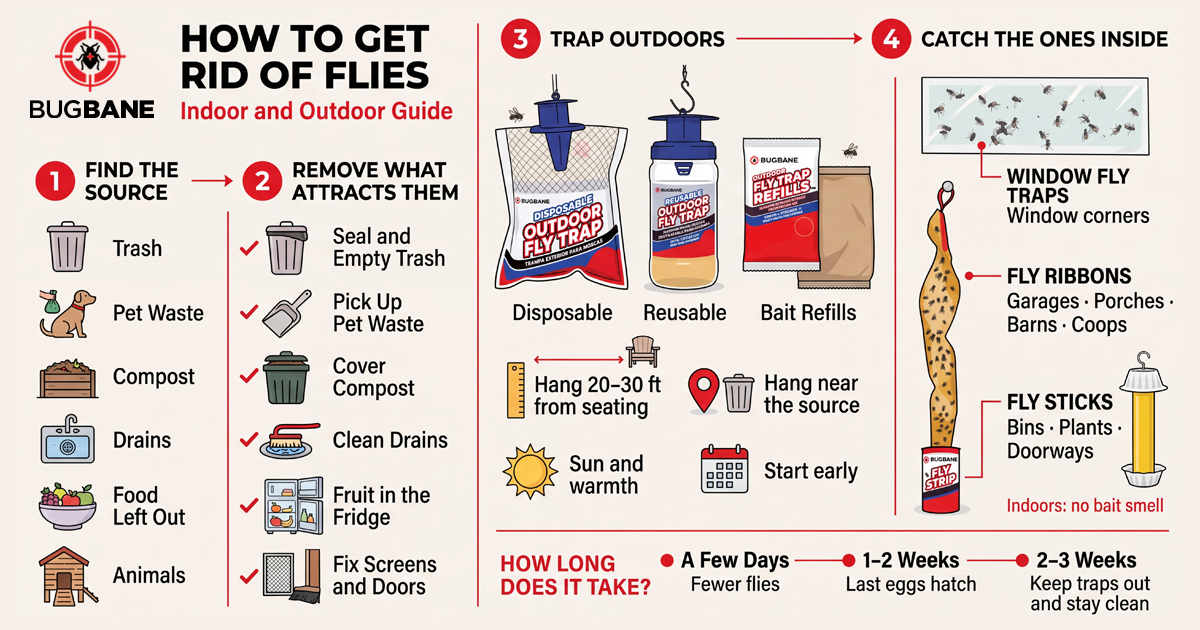
Flies gather where they can feed and lay eggs. Before you set a single trap, spend ten minutes looking for the source. The most common ones around a home are:
- Trash and recycling. Open bins, bins without liners, and residue in the bottom of the can.
- Pet waste. Dog waste in the yard is one of the biggest outdoor fly sources.
- Compost and yard waste. Wet grass clippings, fallen fruit and uncovered compost.
- Drains and standing water. Slow kitchen drains, floor drains and anything that stays damp.
- Food left out. Ripe fruit on the counter, pet food bowls and spills under appliances.
- Animals. Chicken coops, barns, stables and kennels produce steady fly pressure through the warm months.
Not sure what kind of fly you have? The identification chart in our Fly Control guide shows the common ones. The type matters, because house flies, fruit flies and drain flies each breed in different places.
Step 2: Remove what attracts them
- Seal and empty trash often. Use bins with tight lids, bag everything and rinse the can when it smells.
- Pick up pet waste every day or two during warm weather.
- Cover compost and keep it away from doors and seating areas.
- Clean drains with a brush and hot water, and fix anything that leaks or stays wet.
- Store ripe fruit in the fridge and wipe up spills the same day.
- Close the entry points. Repair torn screens, add door sweeps and keep doors shut in the evening.
House flies can go from egg to adult in about a week or two in hot weather, so every breeding spot you remove pays off quickly.
Step 3: Catch the flies outdoors, before they reach the door
Most indoor fly problems start outside. Outdoor bait traps draw flies in with a food-based attractant and hold them. Placement decides how well they work:
- Hang traps away from where people sit. A bait trap attracts flies, so put it toward the edge of the yard, about 20 to 30 feet from the patio or door, not next to the table.
- Put them near the source. Close to bins, the compost pile, the coop or the kennel run.
- Give them sun and warmth. Bait works best when it is warm.
- Start early. Traps set out before the summer peak catch the first generation and keep later numbers lower. See when fly season starts in your region.
- Reusable Outdoor Fly Trap — empty it, add a new bait packet and use it all season
- Disposable Outdoor Fly Traps — add water, hang, and throw the whole trap away when full
- Fly Trap Bait Refills — fresh bait for a reusable trap
Step 4: Catch the ones that get inside
Indoors you want traps with no bait smell. Sticky traps do that job. Flies are drawn to light and to places to land, so put sticky traps where flies already go:
- Window Fly Traps — clear strips that sit in the corner of a window, where flies end up
- Fly Ribbons — hang them in garages, porches, barns and coops
- Fly Sticks — stand or hang one near bins, plants or doorways
Hang sticky traps out of reach of children and pets, and away from places where hair or clothing could brush against them.
How long does it take?
Expect to see fewer flies within a few days of removing the source and setting traps. New adults can keep hatching for a week or two from eggs that were already laid, so keep traps out and keep the area clean for at least two to three weeks. If numbers do not drop, there is usually a breeding spot you have not found yet.
Getting rid of flies: FAQ
What is the fastest way to get rid of flies?
Remove the source and trap at the same time. Take out trash, pick up pet waste, then hang an outdoor bait trap near the source and put sticky traps on the windows indoors.
Why do I suddenly have so many flies?
A sudden wave usually means something nearby started breeding flies a week or two ago: a forgotten bag of trash, a dead animal, pet waste or spoiled food. Hot, humid weather speeds the cycle up.
Where should I hang an outdoor fly trap?
In a warm spot near the fly source and away from where people gather, about 20 to 30 feet from doors and seating. A trap hung beside the patio table brings flies to the table.
Can I use an outdoor bait trap indoors?
No. Bait traps have a strong smell by design and belong outside. Use window traps, ribbons or sticks indoors.
Do fly traps make the problem worse?
A bait trap pulls in flies from the surrounding area, which is why placement matters. Hung away from the house, it draws flies away from you. Hung next to the door, it draws them toward it.
Ready to start? Shop BugBane fly traps on Amazon.