
How the trap works

The BugBane Lantern Fly Trap is a sticky tree-banding kit. It works as a physical adhesive barrier: a high-tack sticky band is wrapped around the trunk of a tree so that spotted lanternflies and other climbing insects are caught on the adhesive as they move up and down the trunk to feed. The band uses no spray and no internal bait — insects are captured on contact with the sticky surface.

What it catches

The adhesive band intercepts spotted lanternfly nymphs and adults as they climb the trunk, along with other small crawling insects such as ants, caterpillars, and beetles that cross the band. It is a barrier trap, not an area-wide lure.

What is in the kit

  • 3 rolls of high-tack sticky fly paper (42.7 feet / 13.01 meters per roll).
  • Securing pins for fastening the band to the bark.
  • An egg scraper for removing egg masses from bark.

How to wrap a tree

  • Choose host trees. Spotted lanternflies favor trees such as Tree of Heaven, maple, walnut, oak, birch, apple, and other fruit trees.
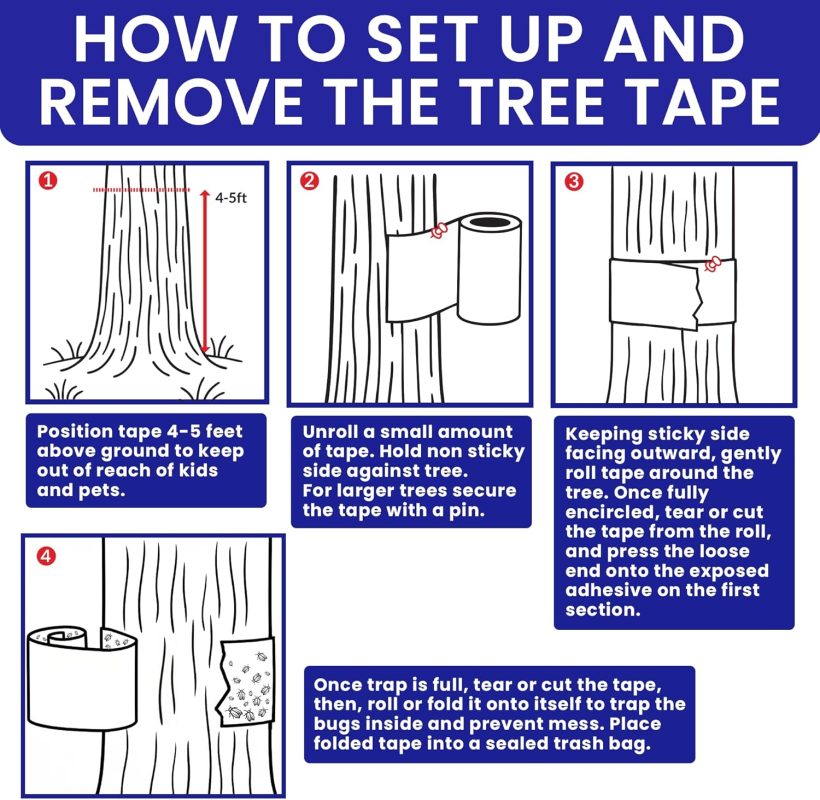
  • Band at chest height. Wrap the sticky paper around the trunk roughly 4 to 5 feet (chest height) from the ground, where climbing nymphs and adults must cross it.
  • Wrap snug, not tight. Keep the band flat against the bark but leave enough slack that it does not girdle the tree.
  • Pin the edges. Use the included pins to hold the band flush against uneven bark so there are no gaps insects can slip behind.

What to expect

  • Inspect weekly. During peak season the adhesive collects insects and debris. When the surface is saturated, replace that section of tape.
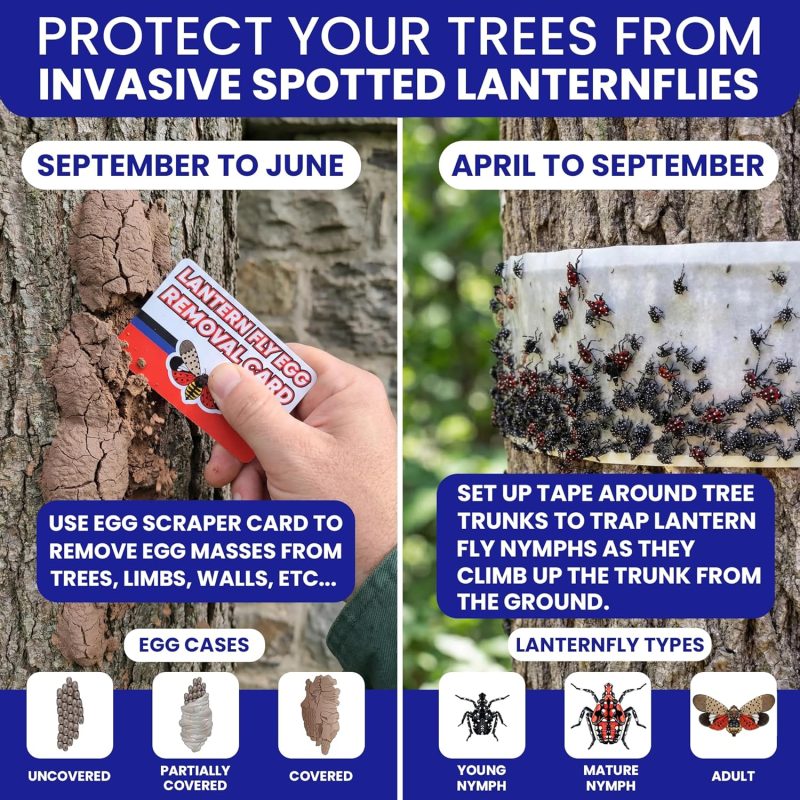
  • Use the egg scraper off-season. Spotted lanternflies lay flat, mud-like egg masses on bark; scraping them into soapy water or rubbing alcohol reduces the next generation.
  • Wildlife awareness. The adhesive is strong. Where small birds or animals frequent the base of a tree, a layer of mesh or screening (not included) can be placed over the band.

Materials

The band is a high-tack, pressure-sensitive adhesive on an inert backing. It is solvent-free and odor-free. The backing material does not leach into the tree’s bark.

Disposal

When a section of band is full, roll the tape back on itself, place it in a plastic bag, and dispose of it in household trash.
General Product Information
  • Brand: BugBane
  • Model Number:

LanFly3 – Lantern Fly Trap 3 Pack

  • Product Type: Adhesive Insect Trap (tree-banding kit)
  • Primary Function: Capture and containment of climbing/crawling insects via high-tack adhesive.
  • Target Species: Spotted Lanternfly (all life stages); also ants, caterpillars, and beetles.
  • Tape Length: 42.7 feet (13.01 meters) per roll.
  • Total Coverage: 128.1 feet (39.0 meters) of barrier protection per 3-roll kit.
  • Tape Width: 3.54 inches (8.99 cm) — wide enough to intercept climbing nymphs and adult lanternflies while remaining easy to apply.
  • Base Material: High-tack, pressure-sensitive adhesive.
  • Adhesion Profile: High-tack and low-migration. The adhesive is formulated to stay on the tape surface and resist running during high-heat summer days.
  • Composition: Solvent-free and odor-free.
  • Waterproofing: The material is hydrophobic and retains its structural integrity during heavy rainfall or irrigation.
  • Temperature Tolerance: Designed to remain effective from 40°F (4°C) up to 110°F (43°C).
  • Securing Method: Each kit includes 20 rust-resistant pins.
  • Application Note: Pins are designed for bark penetration so the band stays flush against uneven tree surfaces.
  • Manual Tools Included: 1 plastic egg scraper for varying bark textures.
  • Storage Conditions: Store in a cool, dry place away from direct sunlight.
  • Shelf Stability: Stored in original packaging at room temperature, the adhesive retains full tackiness for up to 24 months from the date of manufacture.
  • EPA Establishment Number: 93378-CHN-1
  • Pesticide Status: This product is a pesticide device under FIFRA. As a pesticide device it is required to bear an EPA Establishment Number and is not subject to EPA registration.
  • Tree Health: The backing material is inert and will not leach chemicals into the tree’s phloem or xylem.
  • Wildlife Note: The adhesive is highly effective against small-bodied insects. Where local wildlife or pets frequent the base of a tree, a mesh or screen overlay (not included) can be used.
  • Precautions: Keep out of reach of children and pets.
DIRECTIONS FOR USE

Preparation

  • Identify Host Trees: Focus on trees prone to infestation, such as Tree of Heaven, maple, walnut, or fruit trees.
  • Safety Check: Ensure the area is clear of pets or local wildlife. If you live in an area with small animals, consider using a layer of mesh screening (not included) over the trap to prevent accidental bycatch.

Installation

  • Unroll a small amount of tape. Hold the non-sticky side against the tree and secure it with the included pin.
  • Apply the Tape: Peel the backing and wrap the tape around the trunk at chest height (approximately 4–5 feet from the ground).
  • Note: Wrap it snugly, but do not pull so tight that it girdles the tree. Allow enough slack for the tree to grow naturally.
  • Roll the tape around the tree. Once fully encircled, tear or cut the tape from the roll and press the loose end onto the exposed adhesive on the first section.
  • Secure with Pins: Use the included pins to secure the edges of the tape. Space the pins every 3–4 inches to keep the tape firmly in place against the bark, ensuring there are no gaps where insects can bypass the barrier.

Managing the Lifecycle

  • Nymph & Adult Interception: Check your traps weekly. During peak season the adhesive will collect insects and debris. If the trap surface becomes saturated, carefully peel it off, dispose of it, and apply a fresh section of tape.
  • Egg Mass Removal: Use the included egg scraper to inspect the bark for mud-like egg masses. Scrape them off into a container of soapy water or rubbing alcohol. This is a critical step to prevent the next generation from hatching.

Strategic Placement

  • Identify the Host: Spotted lanternflies prefer certain trees. Prioritize installation on oak, maple, apple, birch, walnut, and fruit trees in your yard.
  • Choose the Right Height: Install the tape roughly 4–5 feet (chest height) from the ground. This creates a checkpoint for nymphs and adults as they climb the trunk from the soil.
  • Surface Prep: For maximum adhesion, ensure the area is free of loose dirt, moss, or thick, flaky bark. A smoother surface lets the tape sit flush, preventing insects from crawling underneath.

Proper Application Technique

  • Snug, Not Girdling: Wrap the tape around the trunk firmly so that it sits flat against the bark. Avoid pulling so tightly that it restricts the tree’s natural growth.
  • Use the Pins: Always use the included pins to secure the top and bottom edges of the tape. This prevents the tape from sliding down or flapping in the wind, which could create gaps where insects might pass through.
  • Double-Wrap Strategy: For a severe infestation, apply two strips of tape with a 2-inch gap between them. This creates a secondary line of defense if the first becomes saturated with debris or insects.

Egg Mass Management

  • Don’t Wait for Spring: Use the included egg scraper throughout late fall and winter. Spotted lanternflies lay eggs in flat, mud-like clusters on bark, stone, and even lawn furniture.
  • Scrape & Dispose: Scrape these masses into a container of soapy water or rubbing alcohol. This pre-season work is an effective way to reduce the population before they start crawling.

Maintenance & Monitoring

  • Check Weekly: During peak season (late spring through summer), inspect your traps weekly. If the surface is covered in insects, dust, or debris, replace that section of tape to maintain its high-tack performance.
  • Wildlife Awareness: The adhesive is powerful. If you live in an area with small birds or squirrels, consider wrapping a thin layer of wire mesh or screening over the tape. This allows insects to reach the adhesive while keeping larger animals away from it.

Timing Your Defense

  • Nymph Season (May–July): The traps catch the smaller, flightless nymphs as they move up and down the tree daily.
  • Adult Season (August–November): As they mature, lanternflies become more mobile. Keep your traps fresh during this window to intercept adults before they lay the next season’s eggs.

Frequently Asked Questions

Replace a section of tape when more than half of its surface is already covered with insects.

At about 4–6 feet high (adult eye level). Wrap it snugly around the trunk so insects cannot climb behind the tape.

Roll the tape back on itself, place it in a plastic bag, and dispose of it in household trash.
For most crawling insects, including lanternflies, place the traps from April to September. For ants in warmer climates, traps can be used year-round.

Mix vegetable oil and soap with warm water to remove the glue.

When installed correctly, no. The backing material is inert and does not contain chemicals that soak into the bark. Wrap the band snugly but not so tightly that it girdles the tree.